Martini
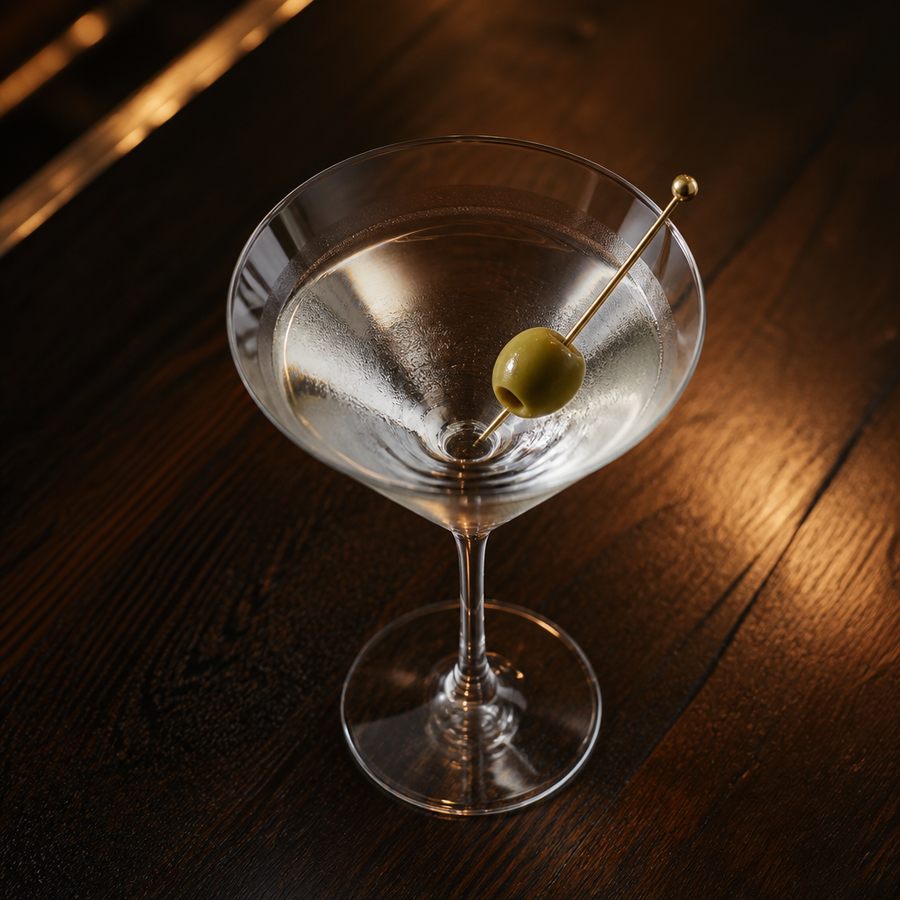
Illustration generated by AI from the recipe’s glass, ice and garnish — not a photograph of a real pour.

- Method: stir
- Glass: Cocktail glass
- Ice: Use ice cubes for mixing.
- Garnish: Garnish with an olive or squeeze oil from lemon peel.
- ABV: 24%
Ingredients
How to make it
- Step 1: Fill a mixing glass with ice cubes.
- Step 2: Add gin.
- Step 3: Add dry vermouth.
- Step 4: Stir well.
- Step 5: Strain into a chilled cocktail glass.
- Step 6: Squeeze oil from lemon peel onto the drink or garnish with an olive.
Martini is a classic cocktail made with gin and dry vermouth, known for its elegant flavor.
The story
The Martini's exact origin is debated, with claims tracing back to the mid-19th century. It gained popularity during Prohibition in the United States, becoming a symbol of sophistication. The drink's enduring appeal lies in its simplicity and versatility, allowing for various interpretations while maintaining its classic status.
How it tastes
The Martini features a crisp, herbal flavor profile from the gin, complemented by the subtle sweetness of vermouth. It is typically served as an aperitif, ideal for social occasions or as a pre-dinner drink.
Getting it right
The key to a perfect Martini lies in the balance of gin and vermouth, as well as the stirring technique. Stirring with ice ensures the drink is chilled without excessive dilution, while the choice of gin influences the overall flavor.
Variations
- Dry Martini — Uses less vermouth for a drier taste.
- Dirty Martini — Includes olive brine for a savory twist.
- Vesper Martini — Combines gin, vodka, and Lillet for a unique flavor.
Substitutions
- Vermouth — Use a dry white wine or a non-alcoholic vermouth alternative.
- Olive — Garnish with a twist of lemon peel if olives are unavailable.
- Gin — Substitute with vodka for a Vodka Martini.
Questions
- What gin is best for a Martini?
- A London Dry gin is often recommended for its strong juniper flavor, but personal preference plays a significant role. Experiment with different brands to find your favorite.
- How much vermouth should I use?
- Traditionally, a 5:1 ratio of gin to vermouth is used, but you can adjust this based on your taste for a drier or wetter Martini.
- Can I make a Martini without alcohol?
- Yes, you can create a non-alcoholic version using non-alcoholic gin alternatives and non-alcoholic vermouth or similar flavored mixers.
This text was drafted by a language model from the catalogue’s data and is machine-translated outside English.
Updated