One formula — 8 cocktails: Negroni and all its family, from Americano to Boulevardier
Material 18+. Excessive alcohol consumption is harmful to your health.
Updated
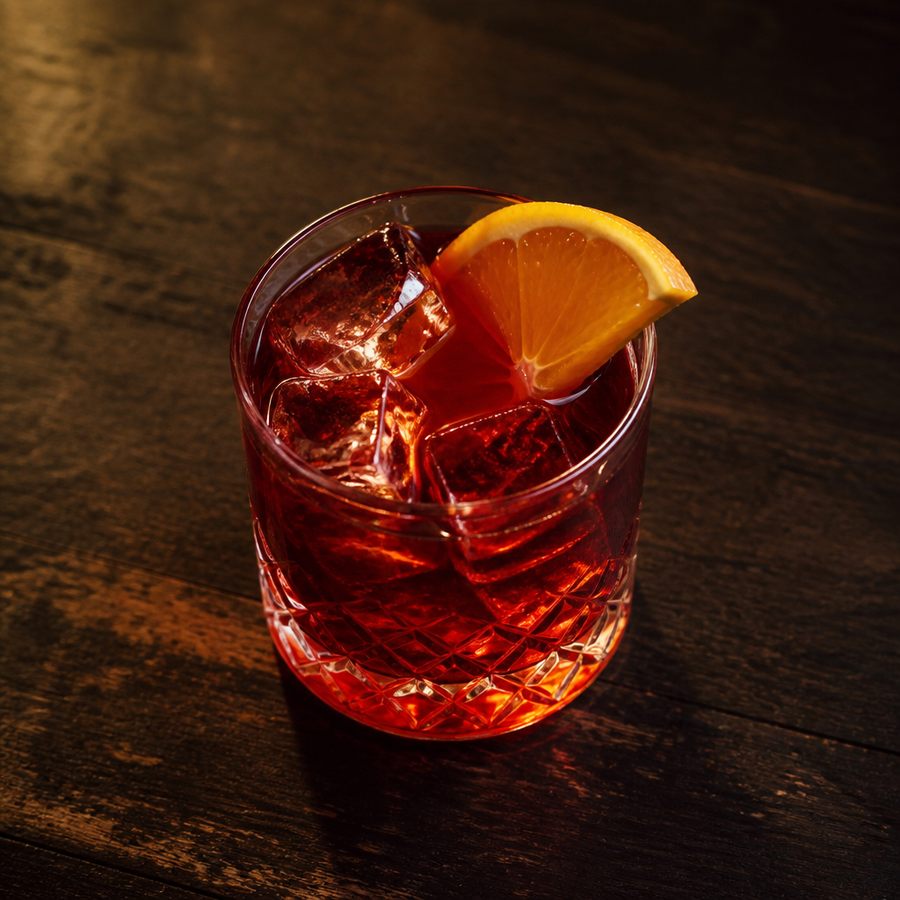
I have a favorite trick behind the bar. A guest asks for a Negroni, I make it, and then I ask: 'Would you like the same thing, but with bourbon? Or with sparkling instead of gin?' Half an hour later, the person is sitting with their fourth glass, drawing on a napkin a diagram of who is whose brother in this family, and who is the uncle. Because Negroni is not a recipe, it's a formula: strong, bitter, and sweet vermouth, all equal parts. Change one variable — you get a new cocktail with its own name and story.
Before diving into variations, two tedious but crucial points. First: vermouth is wine, not a strong spirit. Once you open the bottle — into the fridge it goes, and it lives there for a month, maybe two at most. Vermouth that has sat on the shelf next to gin for six months smells like vinegar and wet cardboard, and any cocktail from this selection will surely be ruined by it. Half of the 'I don't like Negroni' in my experience is really 'I had a Negroni made with dead vermouth.'
The second point — ice. All these cocktails are meant to be sipped slowly, sitting on ice, and small cubes from a tray will turn the drink into pink water in ten minutes. Freeze water in a silicone mold for large cubes or at least in a plastic container, and then chip it with a knife. One large piece of ice melts many times slower than a handful of small ones. That's it, enough of the tediousness — here are eight recipes from the catalog 24cocktails.com, proportions and steps given exactly as they are written on the site.
1. Negroni (Negroni)
The starting point. Gin, Campari, and sweet vermouth in equal parts — a formula that you remember the first time and then can't forget. Legend has it that around 1919, Florentine Count Camillo Negroni asked a bartender to strengthen his usual Americano and replace the soda with gin. The bartender obliged, and what resulted is now ordered in every decent bar around the world. It's an aperitif in its purest form: bitter, rich, whets the appetite, and sets the mood for dinner. The strength is about 19%, so one glass before a meal is normal, two is already evening.
Ingredients
- Gin — 30 ml
- Campari — 30 ml
- Sweet vermouth — 30 ml
How to prepare
- Fill an old fashioned glass with ice cubes.
- Pour in gin, Campari, and sweet vermouth.
- Stir with a bar spoon.
- Garnish with a slice of orange.
Tip: Negronis are stirred, not shaken. A shaker will make it cloudy and watery, while a spoon keeps it clear and heavy. About twenty seconds over ice — and that's enough. Before serving, gently squeeze the orange slice over the glass: the citrus oils on the surface are half the aroma of this cocktail.
2. Boulevardier
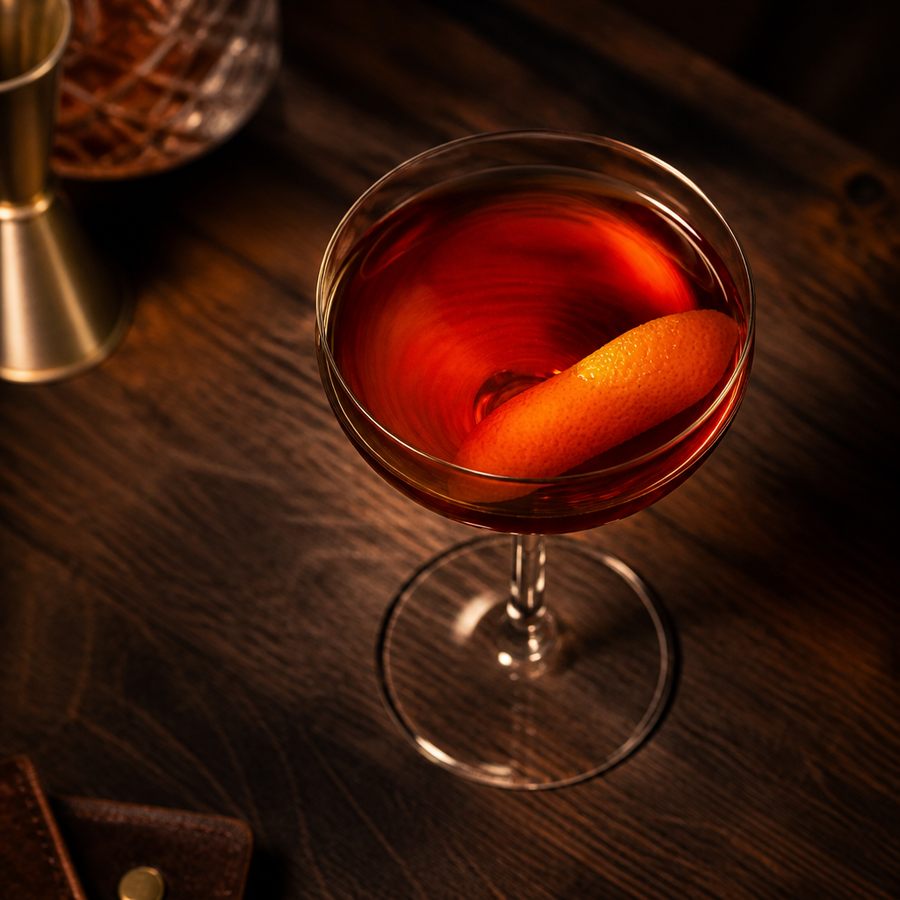
The first substitution in the formula — and immediately the most successful. We swap out gin for bourbon, and the cocktail goes from a crisp Italian aperitif to a smooth, wintery, almost dessert-like drink with caramel and vanilla from the whiskey. Legend has it, Harry MacElhone invented it at the Parisian Harry's New York Bar in 1927 for an American émigré who published the Boulevardier magazine in Paris. Pay attention to the proportions: there's a bit more bourbon than the others — the whiskey is sweet and rich, and the Campari with vermouth won't overpower it. The strength is 21%, served without ice, so it goes down faster than it seems.
Ingredients
- Bourbon — 45 ml
- Campari — 30 ml
- Antica Formula or another well-aged sweet vermouth — 30 ml
How to make it
- Pour bourbon, Campari, and vermouth into a mixing glass with ice.
- Stir and strain into a chilled cocktail glass.
- Garnish as you like: with an orange slice, a lemon twist, or a cherry.
Tip: don’t skimp on the vermouth in a Boulevardier — the recipe isn’t asking for Antica Formula or a similar aged one for nothing. A vanilla-rich, full-bodied vermouth harmonizes with the bourbon, while a cheap watery one will turn the cocktail into a bitter whiskey on the rocks. If you didn’t chill the glass beforehand, serve it on a large cube in an old fashioned — that’s not a mistake, but a perfectly bar-style option.
3. Americano (Americano)
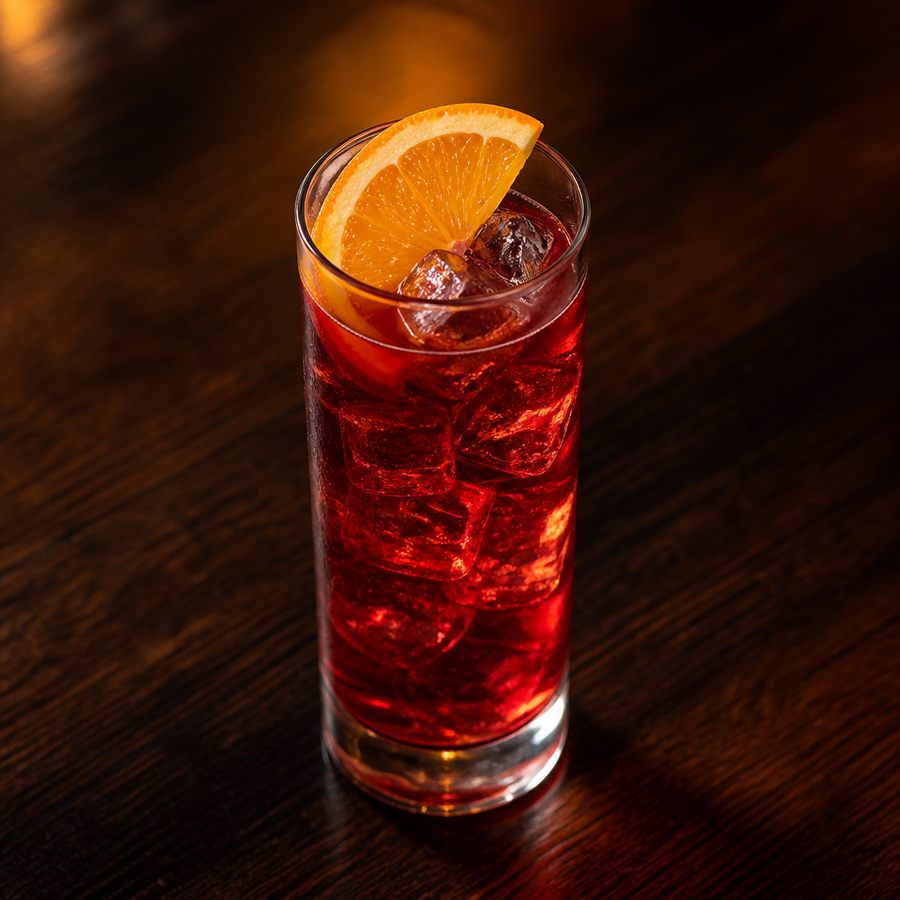
Strictly speaking, this isn’t a variation of Negroni, but its parent. Equal parts Campari and sweet vermouth, topped with soda — legend has it, this was served in the Milan bar of Gaspare Campari back in the 1860s, and the name stuck because of American tourists who fell in love with the drink. We take out the strong stuff, leave the bitter and sweet — and get the lightest cocktail in the collection, at just about 12%. It’s the perfect aperitif for the heat: the bitterness is the same as in Negroni, but with bubbles and without the heaviness. That’s the case when “I want something lighter today” isn’t an excuse, but a specific order.
Ingredients
- Campari — 30 ml
- Sweet vermouth — 30 ml
- Lemon peel — twist
- Orange peel — twist
How to make
- Fill a Collins glass with ice.
- Pour in the Campari.
- Add the sweet vermouth.
- Top off with a splash of soda water.
- Stir.
- Garnish with half an orange.
Advice: the soda should be ice-cold and freshly opened. Stale mineral water from the fridge that's a week old will kill the whole point of an Americano — it lives on bubbles. And don’t overpour: 'a little' in the recipe doesn’t mean half a glass, but literally fill it to the top so the bitterness of the Campari remains noticeable.
4. Negroni Sbagliato
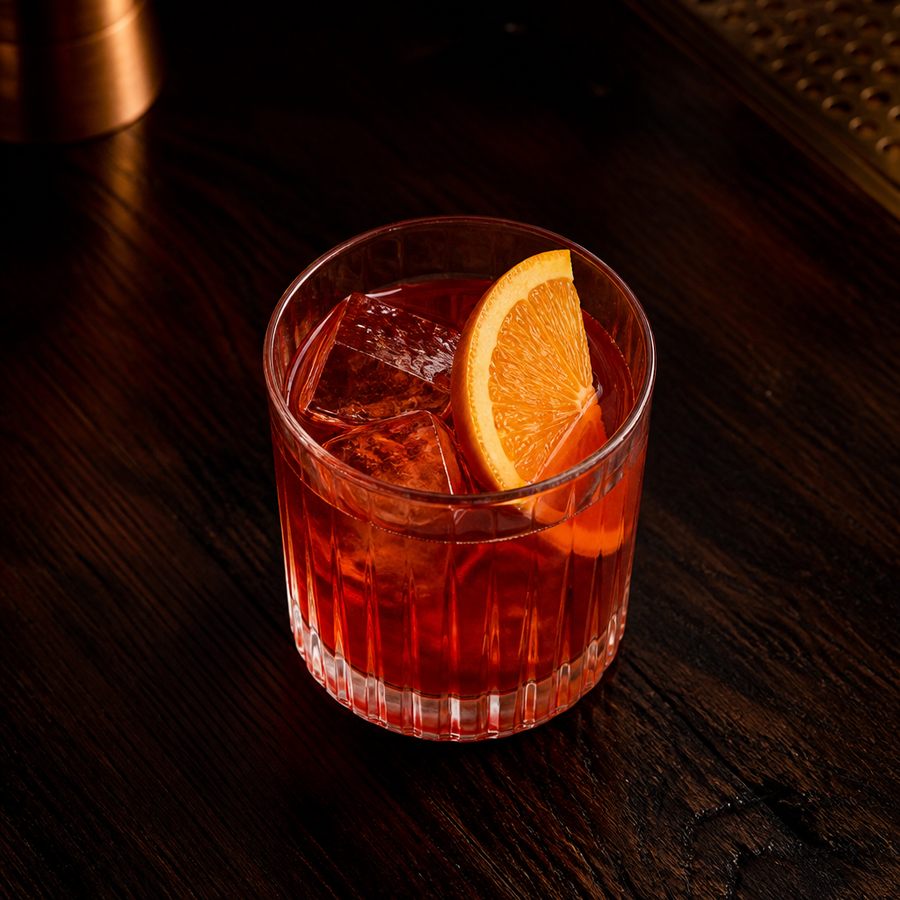
‘Sbagliato’ in Italian means ‘mistaken’, and it’s not a metaphor. Legend has it that in the 1970s at Milan's Bar Basso, a bartender in a rush grabbed a bottle of sparkling wine instead of gin and poured it into a Negroni. The guest didn’t mind and asked for a repeat. Thus was born the most festive member of the family: the bitterness and sweetness are the same, but instead of strong, there are bubbles, and the strength drops to 7%. Note: there’s twice as much sparkling wine here as there is bitter and vermouth — otherwise, the taste will be flat. This is a cocktail for brunch, for a birthday on the terrace, for any occasion when a full Negroni seems too serious.
Ingredients
- Sweet vermouth Martini Rosso — 30 ml
- Italian red bitter — 30 ml
- Spumante Manzoni Rosa Extra Dry — 60 ml
How to prepare
- Pour all the ingredients into a glass with ice.
- Stir gently.
- Garnish with an orange slice.
Tip: add the sparkling wine last and stir with one or two movements of the spoon, no more. Every extra turn knocks out the gas, and instead of a fizzy aperitif, you end up with a sweetish tincture. You don't need expensive champagne here: dry prosecco or any extra brut spumante is exactly what's required.
5. White Negroni
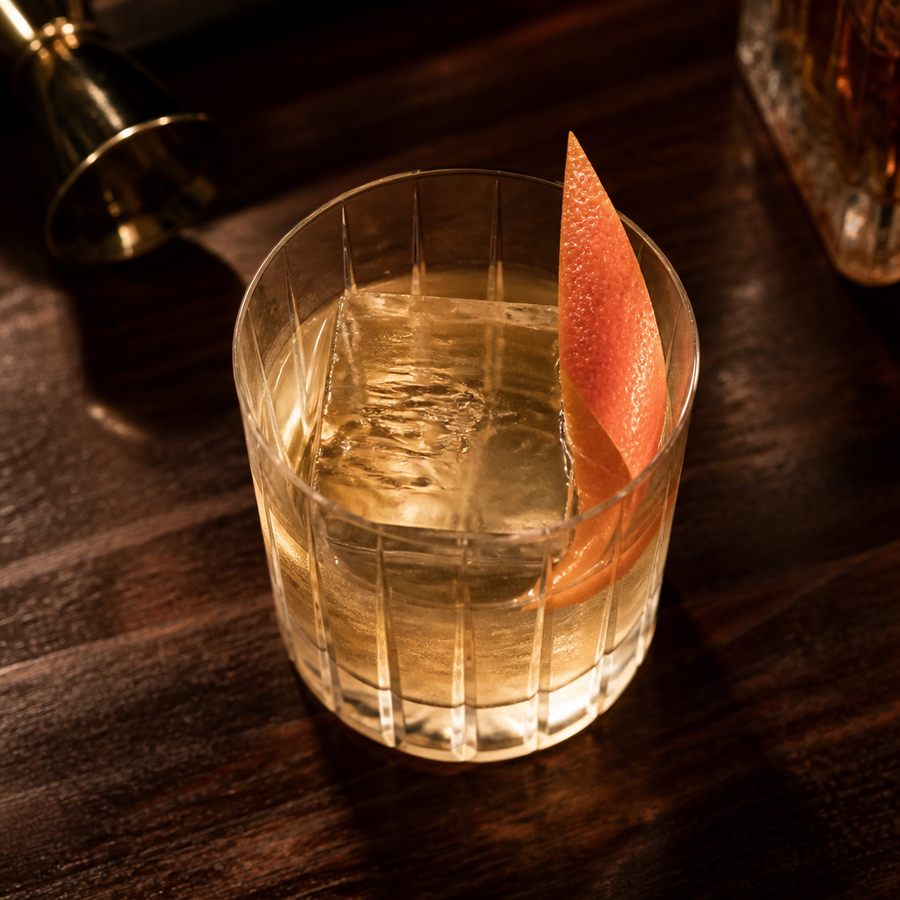
Now we swap out the strong for the bitter and sweet at the same time. Campari is out, replaced by the French liqueur Suze made from gentian root, and sweet vermouth is substituted with Lillet Blanc, an aromatic wine from Bordeaux. Legend has it that London bartender Wayne Collins created this cocktail in 2001 right in Bordeaux when there were no Italian bottles on hand, but there were local ones. The result is a straw-yellow Negroni with herbal, earthy bitterness instead of orange. The strength is the same, around 19%, but the character is completely different: drier, cooler, more grown-up. Of the whole family, this is my personal favorite for those who find Campari too sweet.
Ingredients
- Dry gin Rutte — 30 ml
- Liqueur Suze with gentian — 30 ml
- Lillet Blanc (or another aromatic wine) — 30 ml
How to make
- Pour all the ingredients into a glass with ice.
- Stir.
- Serve garnished with grapefruit zest.
Tip: Suze is an acquired taste, and the first time your hand might tremble. Don’t reduce the portion; it’s better to choose a milder gin and definitely squeeze grapefruit zest over the glass: its oils bind the bitterness and Lillet into a whole. Lillet, like any vermouth, lives in the fridge and lasts no longer than a month.
6. Old Pal
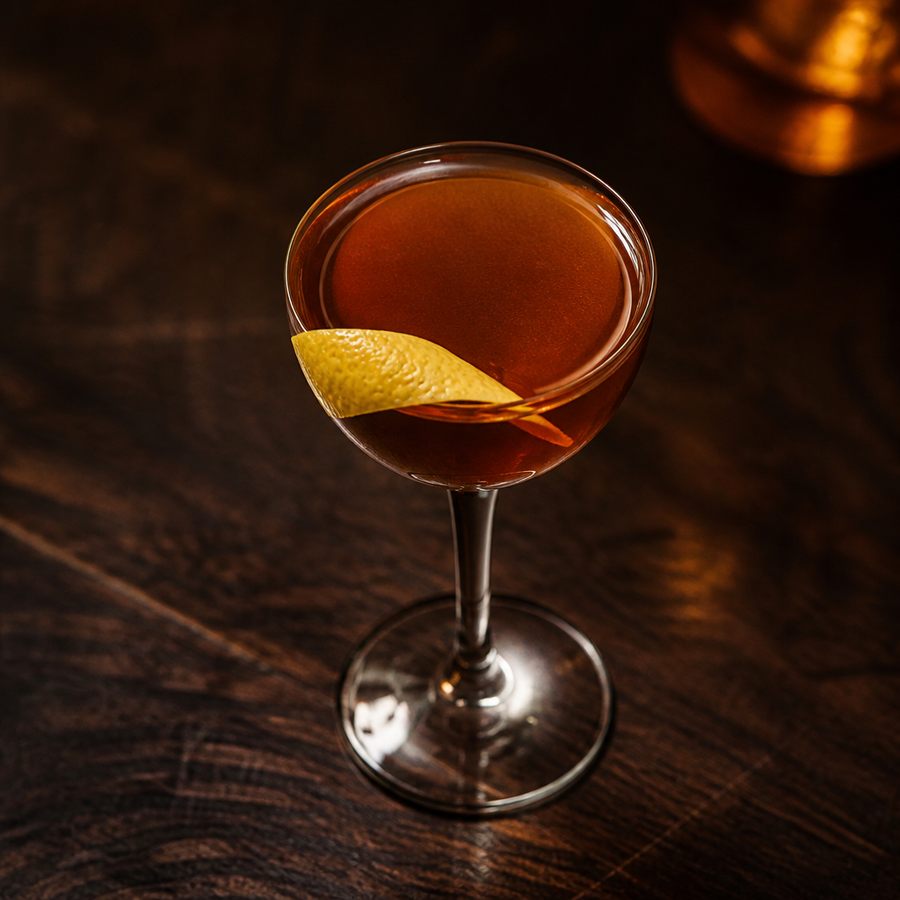
‘Old Pal’ is another Parisian cocktail from the McElhone era, from the 1920s, and it’s essentially a Boulevardier turned inside out: instead of bourbon, it uses rye whiskey, and instead of sweet vermouth, it’s dry. With the sweetness goes the softness: it results in a dry, spicy, sharp cocktail where the peppery rye argues with the bitterness of Campari, while the dry vermouth keeps them at bay. It has an alcohol content of 23%, the highest in the selection. It’s sipped in small gulps from a cold glass, without ice, and demands serious attention — this is not a drink to have while munching on pistachios.
Ingredients
- Rye whiskey — 60 ml
- Campari — 30 ml
- Dry vermouth — 30 ml
How to prepare
- Chill the cocktail glass.
- Pour the whiskey, Campari, and dry vermouth into a mixing glass.
- Fill the mixing glass with ice two-thirds full.
- Stir for about 20 seconds.
- Dump the ice from the chilled glass.
- Strain the cocktail into the glass.
- Garnish with a twist of lemon peel.
Tip: twenty seconds in the recipe is not a random number. Less — the cocktail won't chill or pick up water, more — it will become watery. The dry vermouth in an Old Pal needs to be fresh even more strictly than the sweet: it has no sugar to mask oxidation, and you can tell a 'tired' bottle from the first sip.
7. Mezcal Negroni
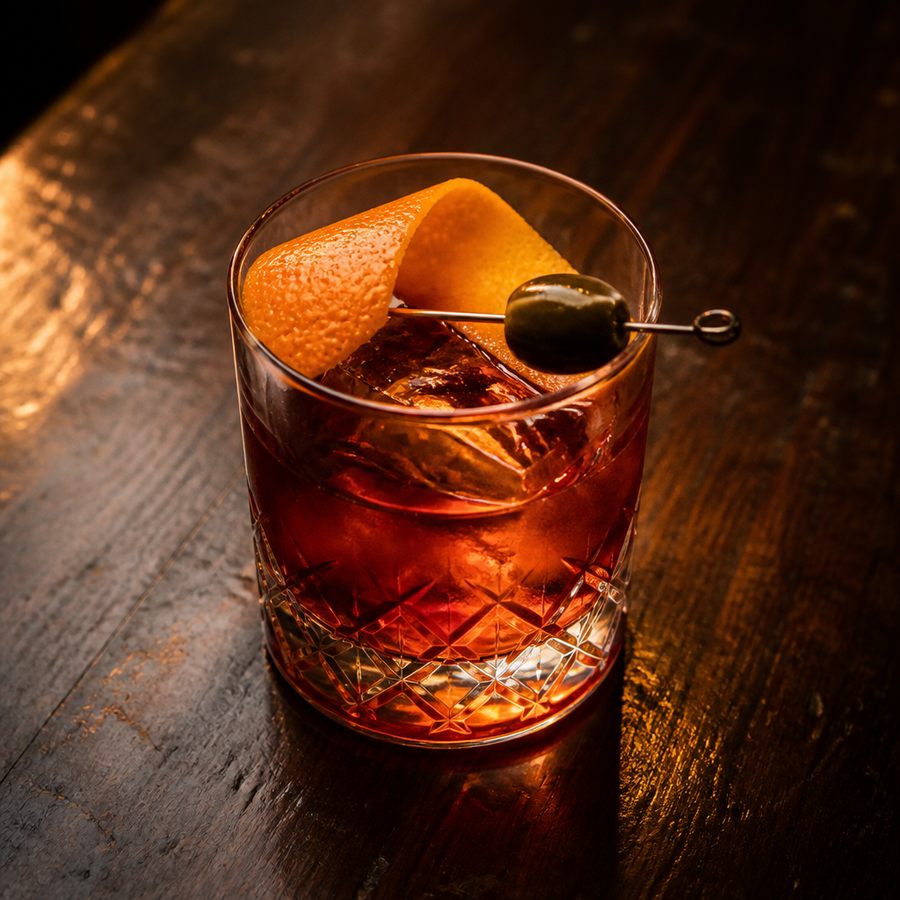
The youngest branch of the family: a modern New York variation, when bartenders discovered mezcal and started throwing it into all the classic formulas one after another. Here the substitution works especially beautifully: smoky, charred agave distillate instead of gin — and the familiar Negroni suddenly smells like a campfire and roasted peppers. The proportions are classic, all 30 ml, with an ABV of about 19%. This cocktail is for those who have memorized the regular Negroni and want something with the same character but a different face. It divides guests right down the middle: some grimace, while others order a second before finishing the first.
Ingredients
- Del Maguey Vida Mezcal — 30 ml
- Italian red bitter — 30 ml
- Sweet vermouth Martini Rosso — 30 ml
How to prepare
- Pour all the ingredients into a glass with ice.
- Stir.
- Garnish with an orange peel and/or an olive.
Advice: use unaged mezcal, 'joven' — it's fresh and smoky, while the aged stuff gets lost behind Campari. The olive in the garnish — not a typo: the salty note clings nicely to the smoke, give it a try at least once. If the smoke feels too overpowering, split the strong portion between mezcal and gin — it's an honest transitional option.
8. Cardinale
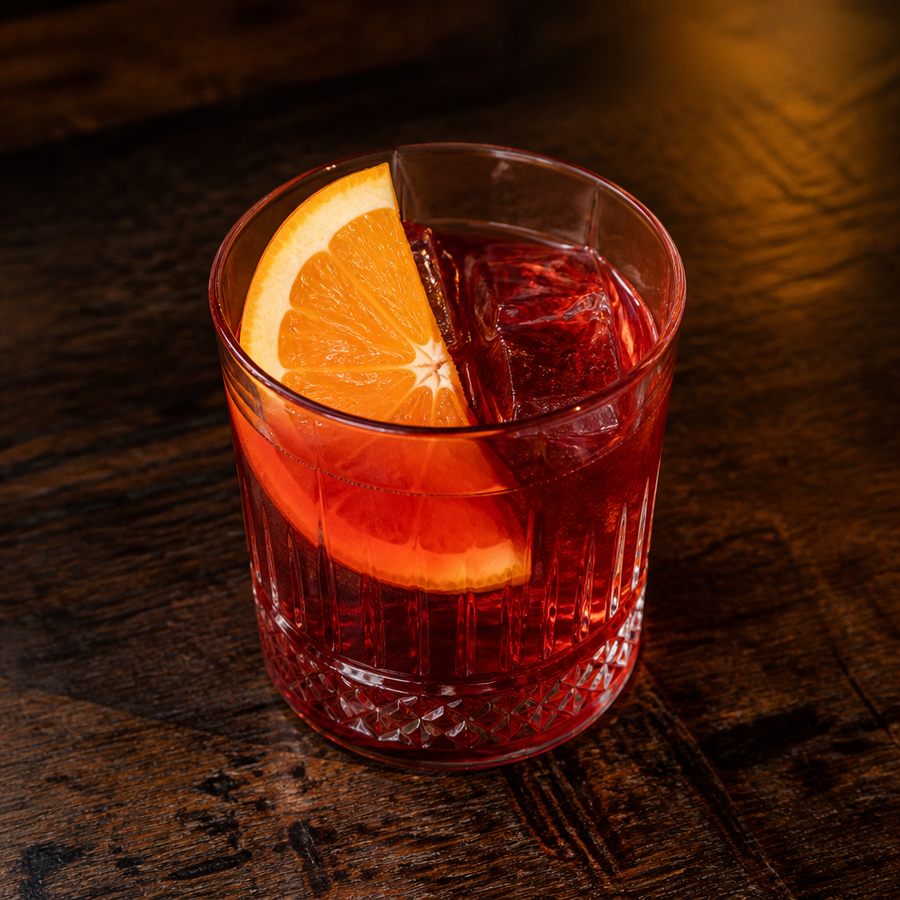
The last variable you can tweak is the vermouth itself. Cardinale is a Negroni made with dry vermouth instead of sweet. Legend has it that the cocktail originated in Rome in the 1950s, and the name refers to the cardinal's purple: the color remains the same, but the taste becomes drier, lighter, and sharper. The proportions here are more generous than usual, at 40 ml each, so you end up with a full serving at around 20% ABV. If Negroni has always seemed too sweet to you, Cardinale is a way to stay in the family without sacrificing anything. Bartenders also love it because dry vermouth is often kept open for martinis — no need to open a separate bottle.
Ingredients
- Dry gin Rutte — 40 ml
- Italian red bitter — 40 ml
- Vermouth Martini Extra Dry — 40 ml
How to prepare
- Mix all the ingredients with ice in a mixing glass.
- Strain into a glass filled with ice.
- Garnish with a slice of orange.
Tip: note that here we mix in one vessel, but serve over fresh ice in another. This way, the cocktail gets the right dilution in the mixing glass, while the glass remains on clean, not yet melted ice and doesn’t turn into water by the middle. A large cube in the serving glass is again the best choice.
Here’s the whole family on one page. Three bottles on the shelf — gin, Campari, and sweet vermouth — make a Negroni; add bourbon or rye, and you have a Boulevardier with an Old Pal; a bottle of sparkling wine turns everything into a Sbagliato, soda into an Americano; Suze and Lillet open the white branch, dry vermouth — Cardinal, and mezcal — smoky. One formula, eight characters. Start with the classic Negroni, and in a couple of weeks, you’ll be sketching the recipe for guests on a napkin.
All cocktails in this category →
Mark the bottles on your shelf — the site will show what you can mix right now →