Old school: 8 cocktails that are over a century old — and they’re still the best
Material 18+. Excessive alcohol consumption is harmful to your health.
Updated
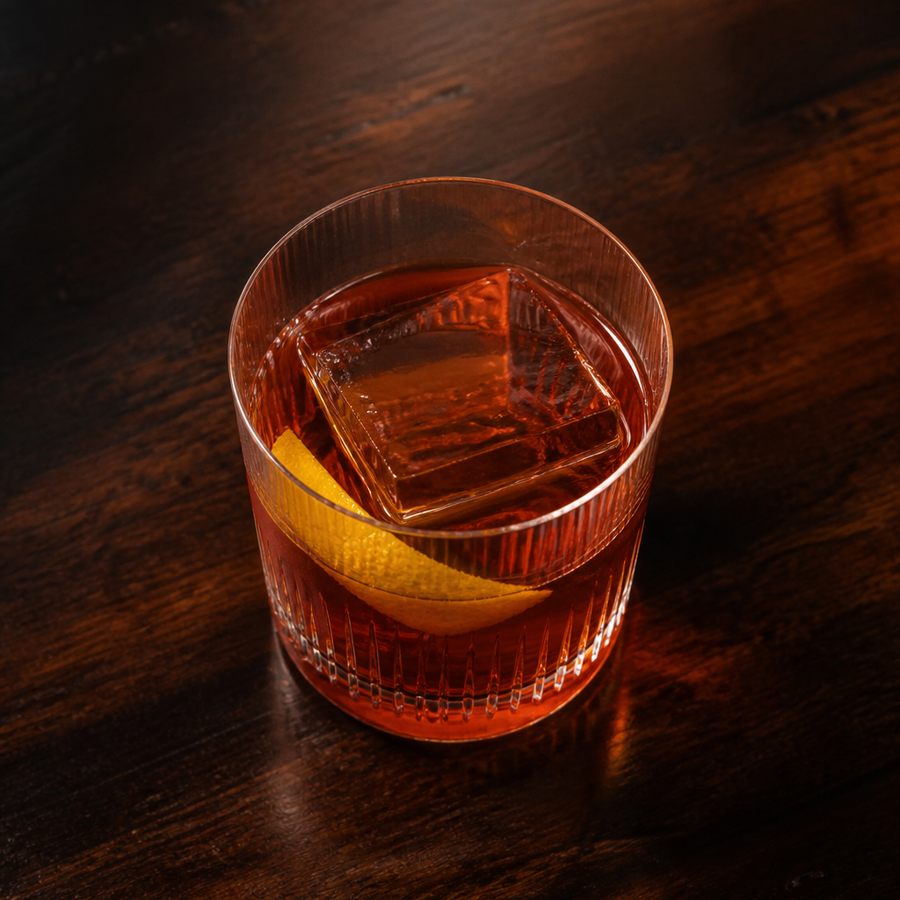
Cocktails have their own 'classic literature' — recipes born before Prohibition, when bartenders wore vests, ice was delivered by horse-drawn carts, and the word 'mixology' didn’t annoy anyone yet. These drinks survived bans, wars, and decades of bad taste with umbrellas — and returned to the menus of the best bars in the world practically unchanged. Because there’s nothing to improve there.
The old school differs from the new in the honesty of its construction: minimum ingredients, zero juices or mixers, flavor relies on spirits, vermouth, and bitters. These are drinks for a slow evening — you don’t gulp them at the bar, you sit with them. If your entire experience is long drinks with soda, start with a Manhattan: it will explain the genre better than any article.
The technique here is the same for everyone — stir, mix with ice: fifteen to twenty seconds with a bar spoon in a mixing glass, strain, serve. The shaker hardly makes an appearance in this company: clear cocktails made with spirits and vermouth don’t need a frothy top. Eight recipes from the catalog 24cocktails.com — with proportions and steps exactly as written on the site.
1. Manhattan
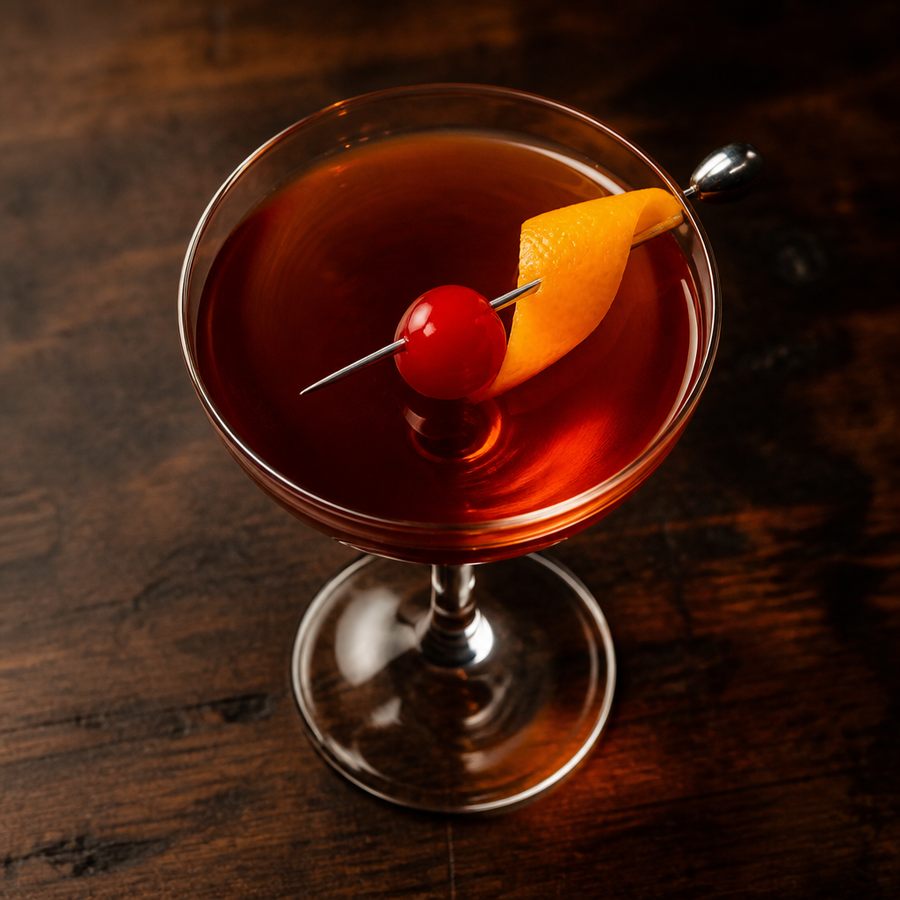
The king of the old school. Whiskey, sweet vermouth, and a dash of bitters — a formula that’s been around for about a century and a half, and it’s still the benchmark for how two ingredients can become something third: vermouth softens the whiskey, whiskey gives the vermouth backbone, and Angostura ties them together with a spicy knot. A Manhattan is sipped slowly and slightly chilled, not ice-cold: too cold, and it hides half the aromas.
Ingredients
- Sweet vermouth — 3/4 oz
- Bourbon (blended) — 2 1/2 oz
- Angostura bitters — 1 dash
- Ice — 2–3 cubes
- Maraschino cherry — 1 piece
- Orange peel — 1 twist
How to prepare
- Fill a mixing glass with ice.
- Add bourbon and sweet vermouth.
- Add a dash of Angostura.
- Stir with a bar spoon until chilled.
- Strain into a chilled cocktail glass.
- Garnish with a maraschino cherry and an orange twist, serve immediately.
Tip: the cherry is not just a garnish from a compote, but a proper finale: get a real cocktail cherry, in thick syrup. And never shake a Manhattan: shaking creates a cloudy foam and breaks the silky texture that you were aiming for.
2. Sazerac
New Orleans in a glass: the Sazerac is called one of the oldest cocktails in America, and the city has officially declared it its signature drink. The ritual is the most important part: the glass is rinsed with absinthe — not poured, but rinsed, so only the ghostly aroma remains — then whiskey with sugar and Peychaud's bitters, lemon peel on top. It smells of anise, you drink whiskey, and the aftertaste is a Creole spice shop.
Ingredients
- Ricard (anise aperitif) — 1 tsp (for rinsing the glass)
- Fine sugar — 1/2 tsp
- Peychaud's bitters — 2 dashes
- Water — 1 tsp
- Bourbon — 60 ml (2 oz)
- Lemon peel — 1 twist
How to make
- Chill an old-fashioned glass and rinse it with absinthe.
- Add crushed ice to the glass and set it aside.
- In a shaker, mix the remaining ingredients with ice.
- Pour out the ice and excess absinthe from the prepared glass.
- Strain the cocktail into a glass.
- Garnish with lemon zest.
Tip: Peychaud's bitters are not a whim, but the DNA of a Sazerac: they are lighter and more floral than Angostura, and you can tell the difference right away. The Sazerac is served without ice — ice was only needed to chill the glass. Squeeze the oil from the zest over the surface and, in true New Orleans fashion, you can leave it out of the glass.
3. Mint Julep
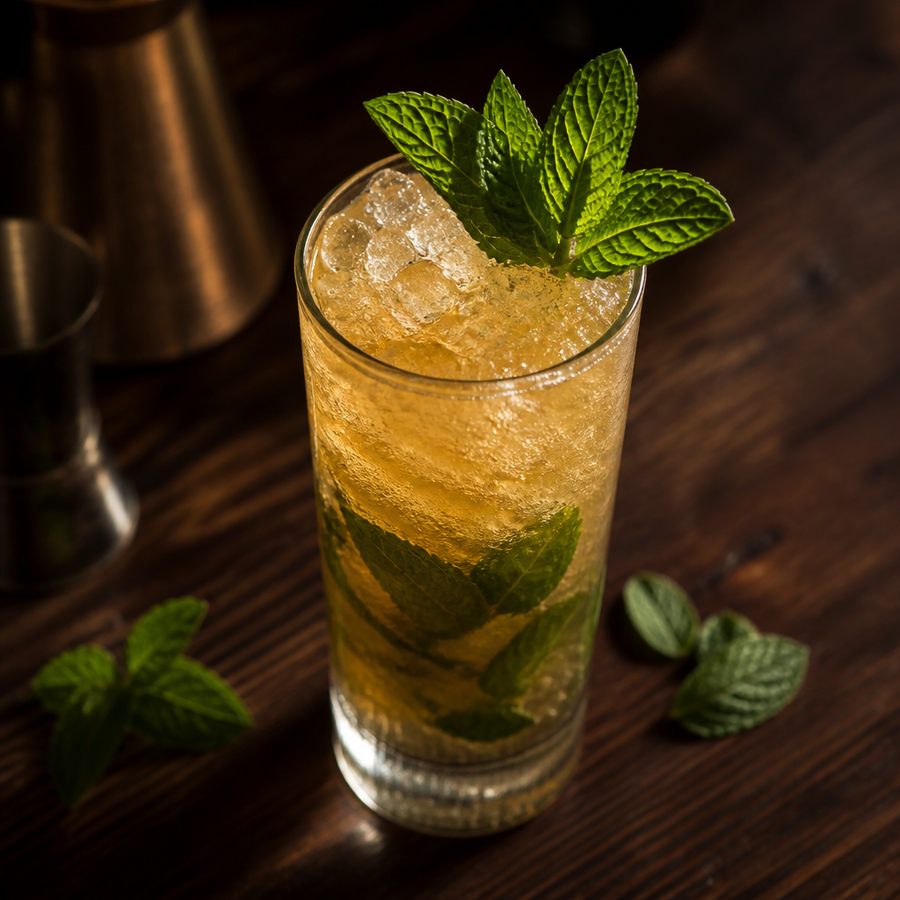
A Southern classic with a plantation pedigree and the official drink of the Kentucky Derby, where they pour it by the tens of thousands of glasses each year. The formula is as simple as a hot day: bourbon, mint, sugar, and a mountain of crushed ice. No citrus — the freshness comes from the mint, and the ice, as it melts, gradually reveals the whiskey. The proper julep is served in a frosted glass, and you’re supposed to hold it by the edges to avoid warming it with your hand.
Ingredients
- Fresh mint — 4 sprigs
- Bourbon — 75 ml (2 1/2 oz)
- Powdered sugar — 1 tsp
- Water — 2 tsp.
How to make it
- In a Collins glass, gently muddle the mint with sugar and water.
- Fill the glass with crushed ice.
- Add bourbon.
- Stir well — until frost forms on the glass.
- Garnish with a sprig of mint.
Tip: Muddle the mint gently, just enough to release its aroma — over-muddled will give bitterness and 'green' in your teeth. Frost on the glass isn't poetry, it's an indicator of readiness: stir until the walls are frosted with cold. Cut the straw short and stick it right into the mint bouquet: your nose should bury into it with every sip.
4. Boulevardier
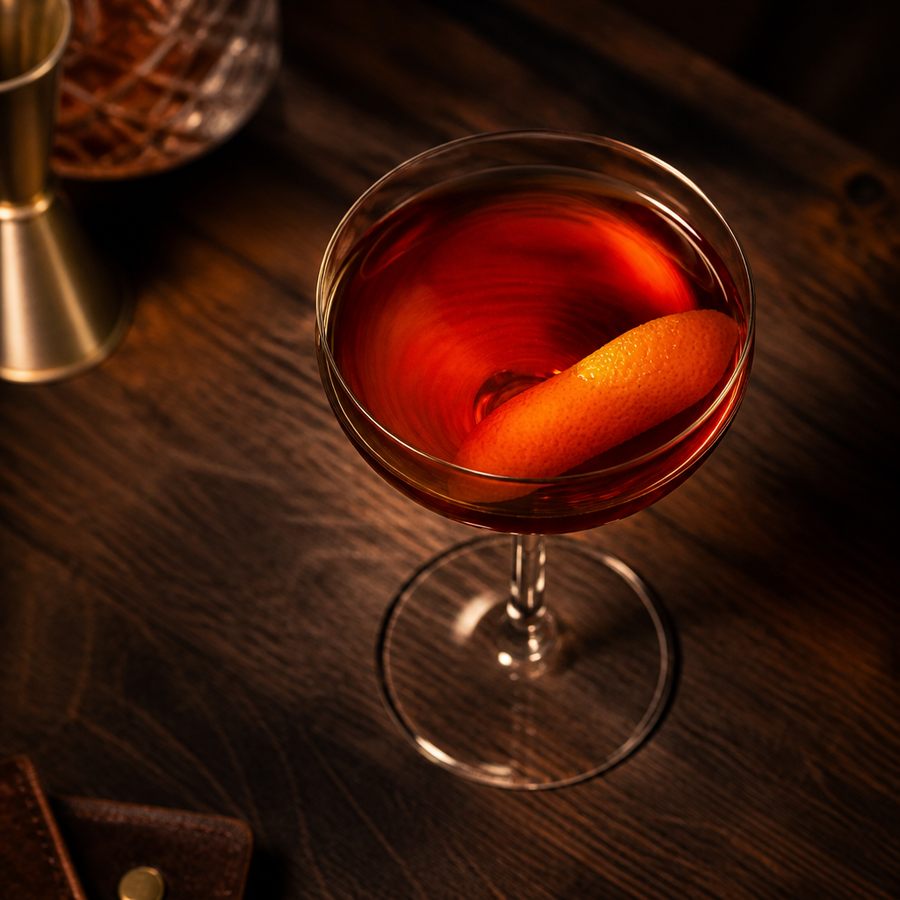
Negroni, having left Milan for Paris: the same Campari-vermouth pair, but instead of gin — bourbon. The recipe is linked to American Erskine Gwynne, who published the magazine "Boulevardier" in Paris in the twenties — a dandy from the boulevards. The whiskey completely changes the character of the drink: instead of the prickly juniper bitterness — a warm, velvety base with a caramel bottom. An autumn-winter answer to the question of "something like a Negroni, but cozier."
Ingredients
- Bourbon — 1.5 oz
- Campari — 1.0 oz
- Aged sweet vermouth (for example, Antica Formula) — 1.0 oz
How to make
- Mix everything over ice and strain.
- Garnish as you like: with an orange slice, a lemon twist, or a cherry.
Tip: note the ratio — the whiskey here is a bit more than the others: the bourbon needs to outshout the Campari, and one and a half to one does the trick. Choose a richer vermouth, with a vanilla-spice profile: in a three-component cocktail, you can't hide cheap players.
5. Blood and Sand
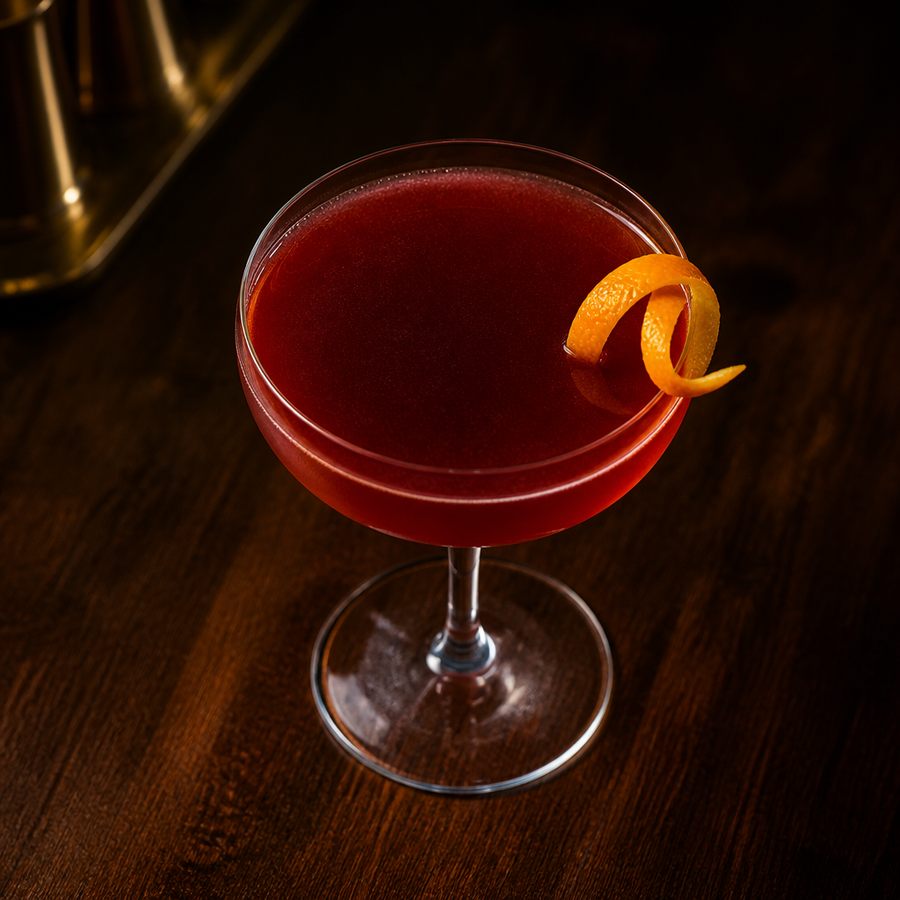
One of the few classic cocktails made with Scotch whisky — and with the most cinematic name: it was named after a silent film from 1922 about a bullfighter starring Rudolph Valentino. Four ingredients, strictly equal parts: smoky Scotch, cherry liqueur, sweet vermouth, and fresh orange. On paper — a strange company, in the glass — a deep dark ruby drink, where smoke, cherry, and citrus take turns like frames from that very silent film.
Ingredients
- Dewar's 12 Year Old Whisky — 22.5 ml
- Cherry Heering Liqueur — 22.5 ml
- Martini Rosso Sweet Vermouth — 22.5 ml
- Freshly squeezed orange juice — 22.5 ml
How to make
- Shake all the ingredients with ice.
- Strain into a chilled glass.
Tip: this is a rare old-school guest that you actually shake — because of the juice. Only fresh orange: the packaged stuff turns a noble cocktail into a whiskey compote. After shaking, squeeze the oil from the orange peel over the glass — the top aromatic note makes all the difference.
6. Old Pal
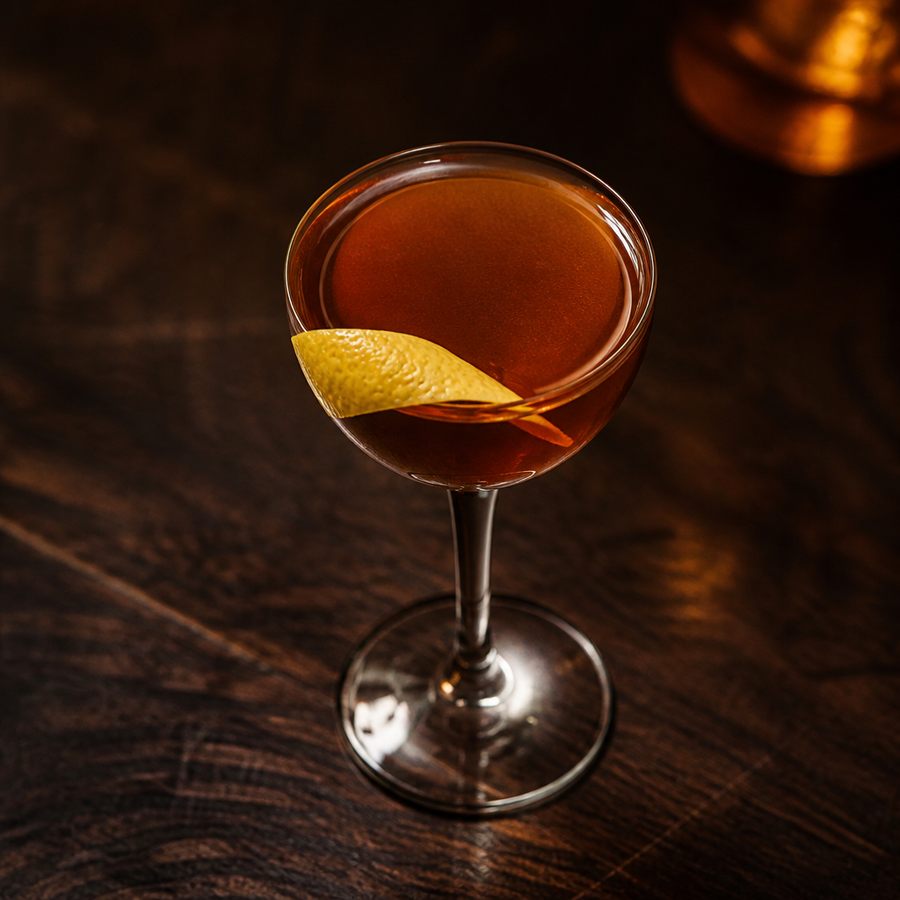
"Old Pal" — a dry brother to the Boulevardier from those Parisian twenties: rye whiskey instead of bourbon, dry vermouth instead of sweet. Two substitutions — and the cocktail becomes tougher, drier, more grown-up: rye brings a peppery spice, dry vermouth takes away the sweetness, Campari remains the bitter middle ground. This is a drink for those who have already passed the sweet classics and want a conversation without sentiment.
Ingredients
- Rye whiskey — 60 ml
- Campari — 30 ml
- Dry vermouth — 30 ml
How to make
- Chill the cocktail glass.
- Pour the whiskey, Campari, and dry vermouth into a mixing glass.
- Fill the mixing glass with ice two-thirds full.
- Stir for about 20 seconds.
- Dump the ice from the chilled glass.
- Strain the cocktail into the glass.
- Garnish with a twist of lemon peel.
Tip: Lemon peel is essential here — not orange, like its sweeter relatives: lemon highlights the dry character. If you don't have rye whiskey, a strong grain bourbon will do, but try to find rye: Old Pals was created specifically for its spiciness.
7. Apple Manhattan
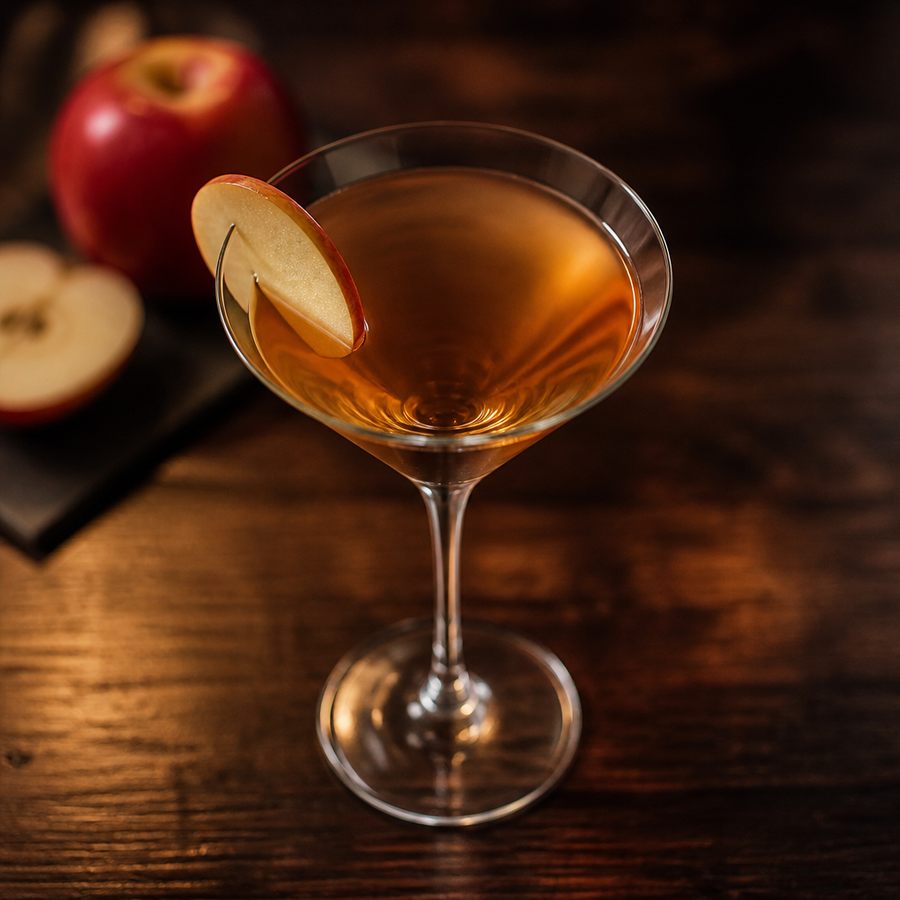
A bridge between the old school and the new: the basic Manhattan structure, where part of the vermouth is replaced with apple schnapps. It results in an autumn Manhattan — whiskey with baked apple and soft sweetness, which even appeals to those who wrinkle their noses at the classic Manhattan. A good trick for the home bar: once you master the classics, you start to bend them to the season — and the apple version is the best example of that.
Ingredients
- Bourbon — 50 ml
- Apple schnapps — 35 ml
- Sweet vermouth Martini Rosso — 12.5 ml
How to prepare
- Mix all the ingredients with ice.
- Strain into a chilled glass.
- Garnish with a slice of apple or an apple fan.
Tip: use green apple schnapps (sour apple will give a candy-like tartness) or calvados for a more adult version — with it, the cocktail leans towards a Norman autumn. Spray the apple slice for garnish with lemon juice to prevent it from browning in the glass.
8. Corpse Reviver No.2
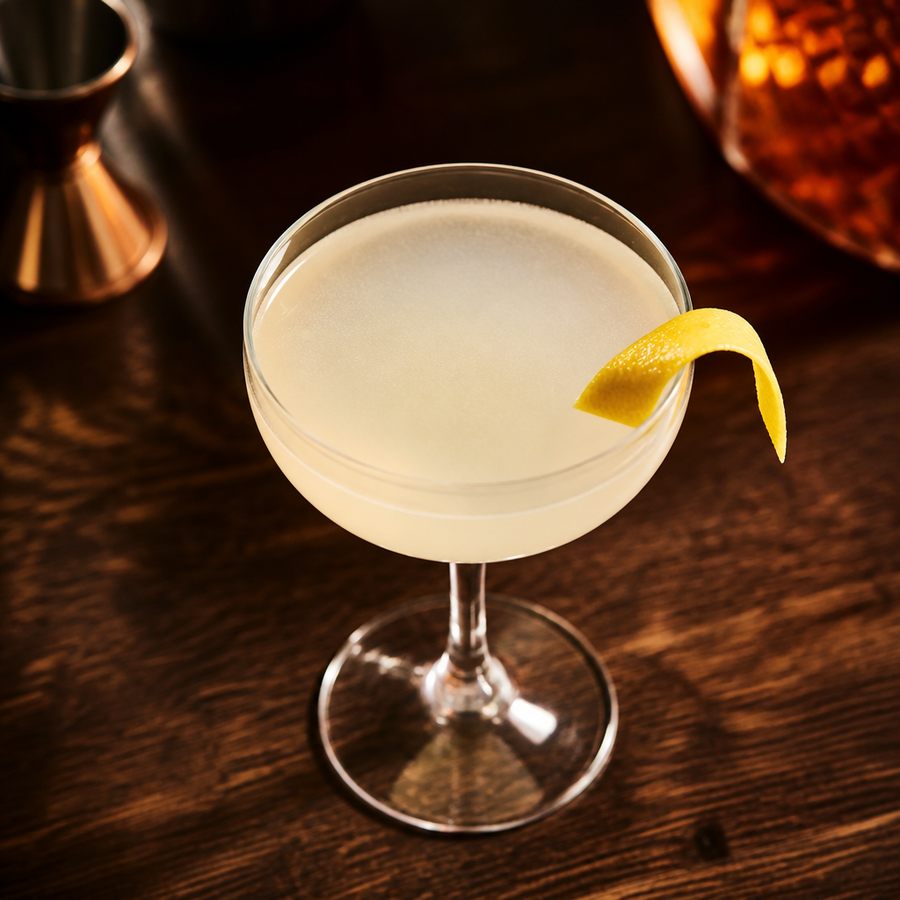
A finale with dark humor: the family of 'corpse revivers' was originally consumed in the morning — to come back to life. Formula No.2 was immortalized in Harry Craddock's 1930 'Savoy Cocktail Book' — with a warning that four servings in a row will have the opposite effect. Gin, orange liqueur, aromatized wine, and lemon in equal parts plus a shadow of absinthe: a light, tart, perfectly balanced cocktail that goes down dangerously easy for its strength.
Ingredients
- Dry gin Rutte — 22.5 ml
- De Kuyper Triple Sec (40%) — 22.5 ml
- Lillet Blanc (or another aromatized wine) — 22.5 ml
- Lemon juice (freshly squeezed) — 22.5 ml
- Simple syrup — 2.5 ml (optional)
- Absinthe La Fée Parisienne — to taste
How to make
- Mix all the ingredients with ice.
- Strain into a chilled glass.
- Garnish with lemon zest.
Tip: absinthe — just a drop, it's here for aroma, not as an ingredient: the easiest way is to rinse the glass with it, like in a Sazerac. Add syrup only if the lemon turns out to be a nasty one. And remember Craddock's advice: this 'reviver' works only up to the third serving.
Eight veterans that don’t need special effects. Start with a Manhattan and Boulevardier — they forgive beginners; a Sazerac and a Julep will require a ritual, but will reward you; save the Old Pal for a night without fuss. Notice the common thread: none of the recipes include soda or juice as a mixer (except for the honest orange in 'Blood and Sand') — the old school speaks directly to the spirit. That’s why it never gets old.
All cocktails are in the catalog →
Mark the bottles on your shelf — the site will show you what you can mix right now →