Two hundred years of cocktails over five eras: from medicine to Penicillin
Material 18+. Excessive alcohol consumption is harmful to your health.
Updated
If you open any bar menu, you'll find that half of the items on it are older than your parents, and the other half was invented yesterday. Guests usually don't notice this: Negroni and Espresso Martini sit in the same column as if they were contemporaries. And between them — a hundred years, Prohibition, two world wars, and an entire era that cocktail culture is still ashamed of.
I love telling this story to guests because it explains the taste. Why are old cocktails strong and almost juice-free? Because there was neither ice nor citrus year-round. Why did everything suddenly become honeyed and creamy in the twenties? Because they were masking questionable spirits. Why did people drink sweet, colorful nonsense in the seventies? Because fresh juice lost to ready-made mixes, and the bar lost to the disco.
Below are five eras and ten drinks, two for each era. They are all in the catalog at 24cocktails.com, so you can not only read the history but also drink it. The ingredients and steps are exactly as written in the recipes on the site.
Era one. 1806–1900: the cocktail as a formula
The word 'cocktail' was first defined in print in 1806, in the newspaper The Balance and Columbian Repository: 'spirits, sugar, water, and bitters.' This is not a description of a category — it's literally a recipe. For the next fifty years, cocktail meant exactly these four things, consumed in the morning, considered something between an aperitif and medicine, and completely unconcerned with balance: ice was a luxury, lemons were rarely imported.
The turning point — 1862: Jerry Thomas publishes 'How to Mix Drinks', the first bartending book, and the profession gains a canon. At the same time, industrial ice becomes cheaper and European vermouths arrive. From these three events, everything else is born.
1. Old Fashioned
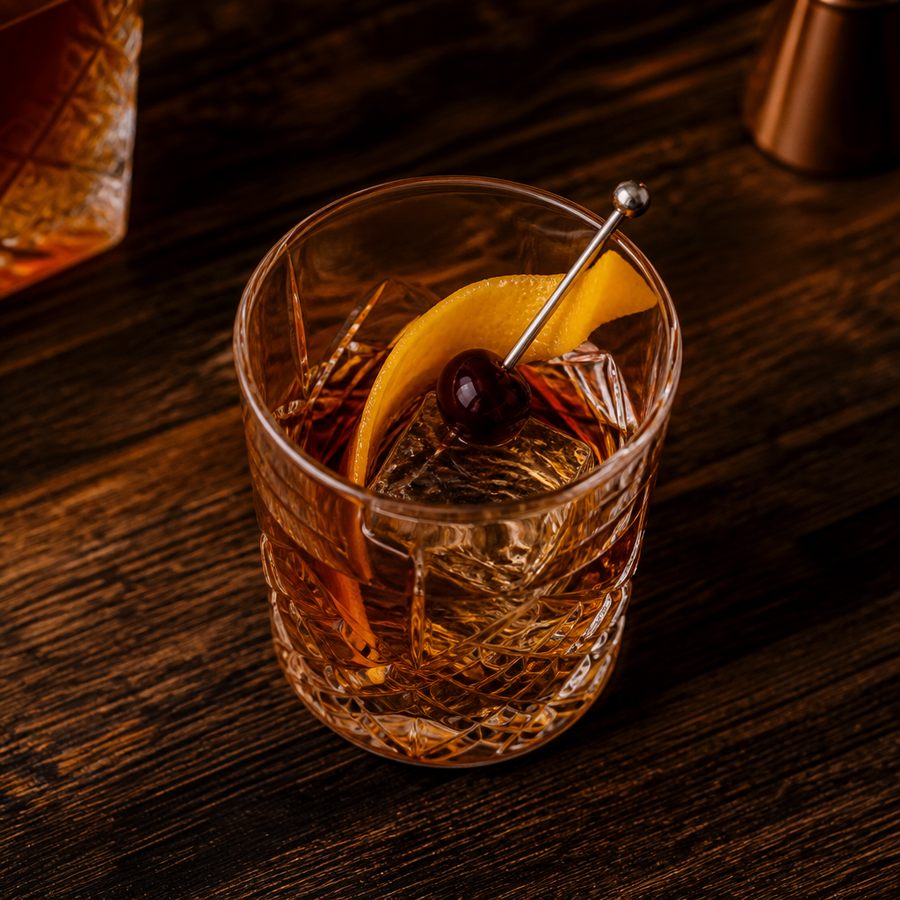
The very recipe from 1806 that has survived to this day unchanged. The name came later, in the 1880s, and was essentially a grumble: when bartenders started adding liqueurs and juices to drinks, conservatives began asking for it to be made 'the old way' — old-fashioned. The request turned into a menu item and outlived everyone who laughed at it. 24% — that's almost pure whiskey, and that's the whole point: the cocktail here doesn't hide the alcohol, it showcases it.
Ingredients
- Bourbon — 60 ml
- Simple syrup — 10 ml
- Angostura bitters — 2–3 dashes
How to make
- In an old fashioned glass, place a large ice cube.
- Add the simple syrup and bitters.
- Pour in the bourbon.
- Gently stir with a bar spoon for 20–30 seconds.
- Squeeze the oil from the orange peel over the glass.
- Garnish with the peel and a cocktail cherry.
Tip: one large ice cube instead of a handful of small ones — it's not show-off, it's physics. It melts slower and keeps the strength where it's intended; on small ice, after five minutes you're drinking watered-down bourbon.
2. Manhattan
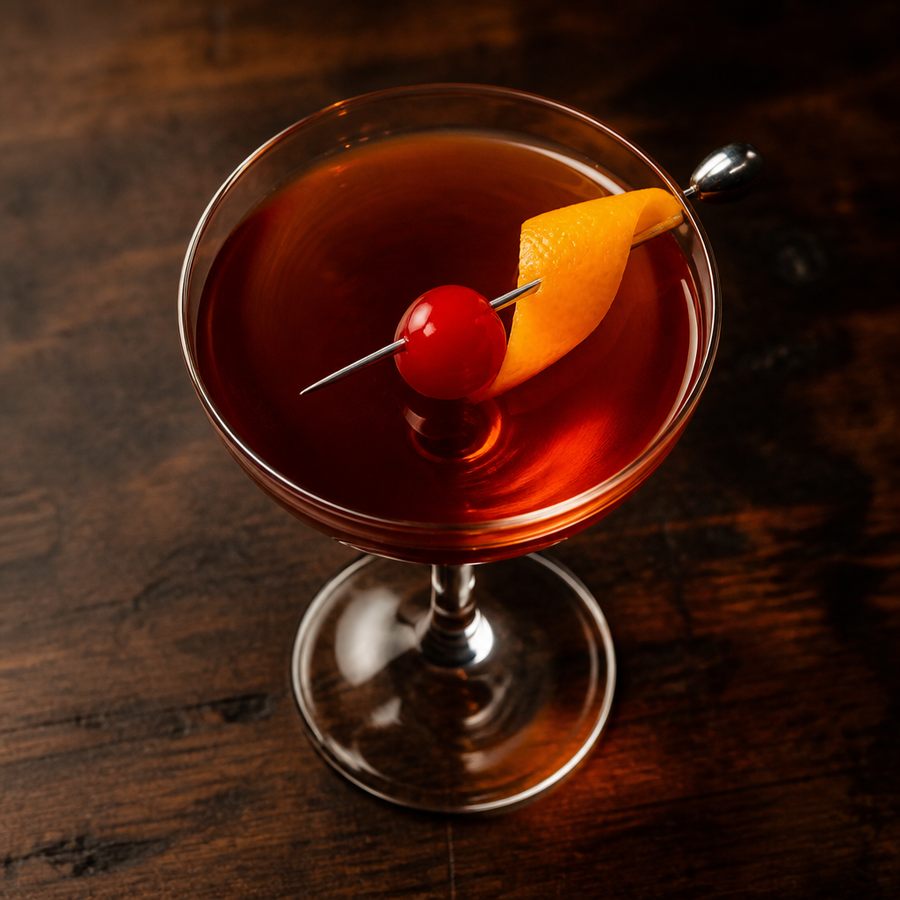
The first cocktail where vermouth became a full-fledged participant, not just an addition. It appeared in New York in the 1880s; the beautiful legend about Churchill's mother supposedly ordering it at the Manhattan Club has been debunked by historians — she was in another country at that time. But the drink didn't get any worse for it: 26% strength, zero juice, all the complexity from the vermouth and bitters. If an Old Fashioned is whiskey with an accent, then a Manhattan is whiskey with a conversation partner.
Ingredients
- Bourbon — 75 ml
- Sweet vermouth — 22.5 ml
- Angostura bitters — a dash
- Maraschino cherry — 1 piece.
- Orange peel — 1 twist
How to make it
- Fill a mixing glass with ice.
- Add bourbon and sweet vermouth.
- Add a dash of Angostura.
- Stir with a bar spoon until chilled.
- Strain into a chilled cocktail glass.
- Garnish with the cherry and the twist of orange peel.
Tip: Vermouth is wine. An opened bottle lives in the fridge for a month, not a year on the shelf by the stove. Half of the 'bad Manhattans' are not a recipe, they’re oxidized vermouth.
Era Two. 1920–1933: Prohibition and the Art of Disguise
On January 17, 1920, America banned alcohol — and inadvertently gave the cocktail the best advertising in history. People didn’t stop drinking; they just started drinking worse: bootleg, moonshine, spirits with additives. The bartender's task shifted from 'highlight' to 'hide,' and recipes began to feature honey, cream, fruit juices, and liqueurs in abundance.
The second consequence turned out to be more important than the first: American bartenders left. To London, Paris, Havana — and took their recipes with them. That’s why the best book of that era was published not in New York, but in London’s 'Savoy.'
3. Bee's Knees
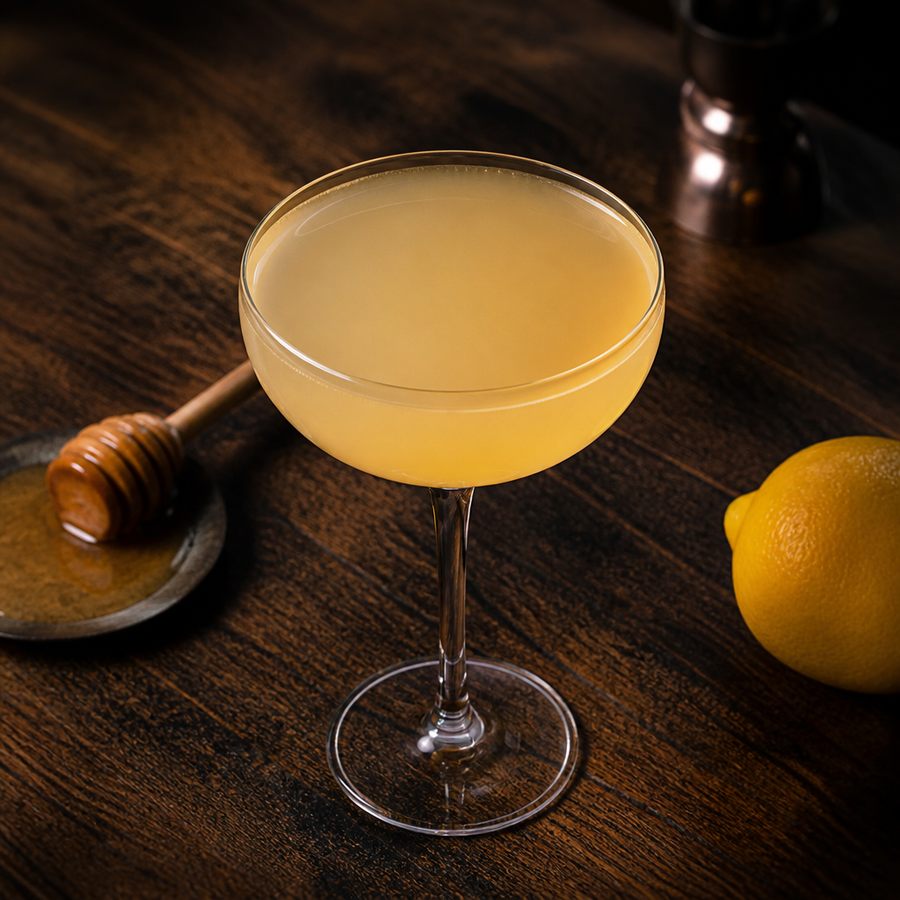
The name is slang from the twenties, meaning something like 'the best.' The recipe is brutally honest in its purpose: honey and lemon juice in such proportions that any quality gin becomes palatable. Today, it works the other way around — take a good gin, and a drink that was once about disguise turns into one of the most charming sours out there.
Ingredients
- Gin — 60 ml
- Honey syrup — 22.5 ml
- Lemon juice — 22.5 ml
How to make
- Mix gin, honey syrup, and lemon juice with ice.
- Strain into a chilled glass.
Tip: honey doesn't dissolve in a cold cocktail — it just sinks to the bottom in a lump. Dilute it with hot water one to one, cool it down, and you'll have honey syrup that lasts a couple of weeks in the fridge.
4. Corpse Reviver No.2
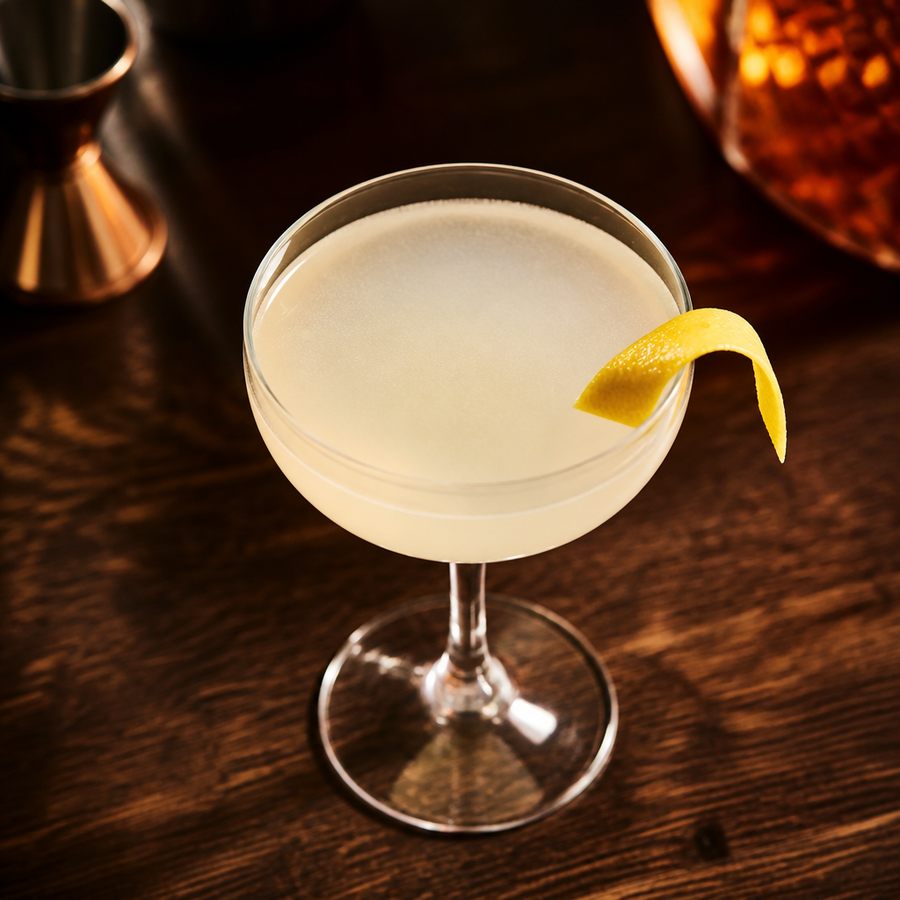
Harry Craddock, who left dry America for London's Savoy, published this recipe in 1930 with a note that's still quoted today: four of these in a row — and the corpse will rise again. This is a morning cocktail in the most literal sense: the 'corpse reviver' category was conceived as a hangover cure. Four ingredients in equal parts plus a dash of absinthe — a rare case where a symmetrical recipe yields an asymmetrical, very lively flavor.
Ingredients
- Dry gin — 22.5 ml
- Triple sec — 22.5 ml
- Lillet Blanc (or another aromatized wine) — 22.5 ml
- Lemon juice — 22.5 ml
- Simple syrup — 2.5 ml (optional)
- Absinthe — rinse the glass
How to prepare
- Mix all the ingredients with ice.
- Strain into a chilled glass that has been rinsed with absinthe.
- Garnish with lemon peel.
Tip: You only need a drop of absinthe, literally: pour a little into the glass, swirl it around, and pour out the excess. If you can taste the absinthe as an ingredient rather than just a scent — you've poured ten times more than necessary.
Era three. 1934–1960: tiki and the tropical escape
Prohibition was repealed in December 1933, and that same year, Don the Beachcomber bar opened in Hollywood. A year later, Trader Vic's appeared in Oakland. Both sold not just drinks, but an escape: bamboo, torches, idols, skull-shaped glasses, five types of rum in one glass, and a flaming garnish. America, just having survived the Great Depression, bought into this fantasy whole hog.
Tiki was the first era when the cocktail became the script for the evening, and recipes became a commercial secret: Don Beach encrypted his mixes, and some of them took decades to decode.
5. Zombie
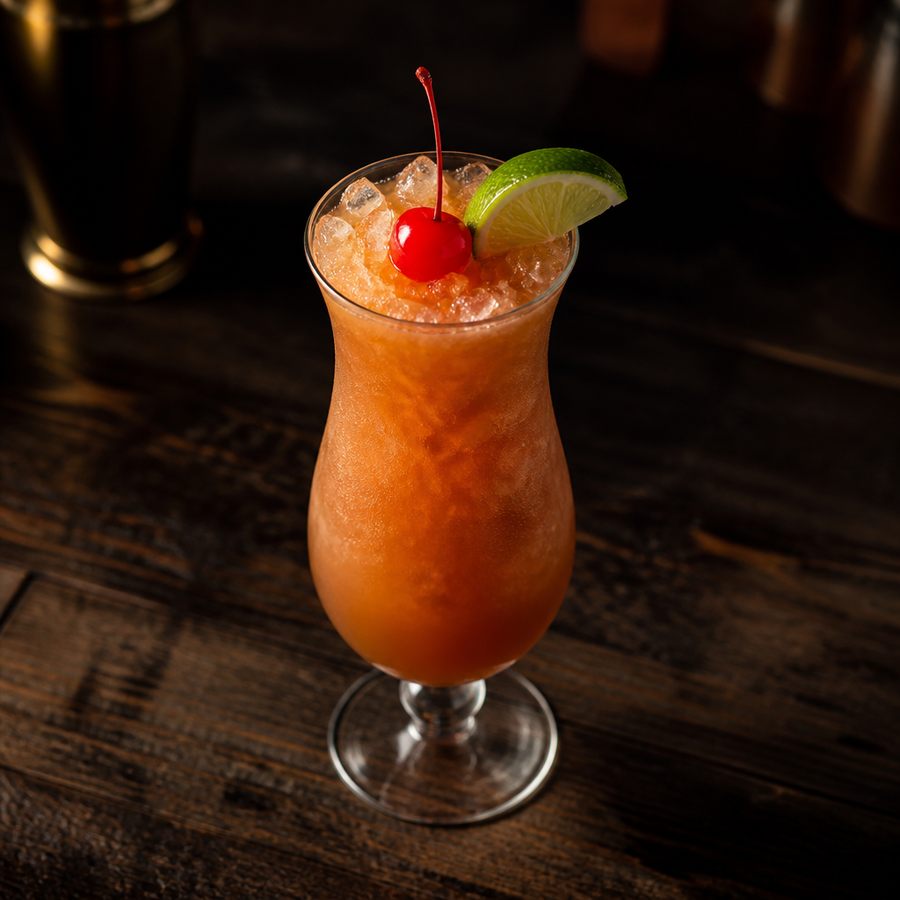
1934, Don the Beachcomber. The legend goes that Don mixed it for a guest who needed to survive a business meeting while hungover; the guest later complained that he turned into a zombie. 29% in a tall glass — that's not for bravery, but for honesty: at Don's bar, the limit was strictly two in one hand, and that rule is still written in the menus of serious tiki bars.
Ingredients
- White rum — 45 ml
- Gold rum — 45 ml
- 151-proof rum (float) — 30 ml
- Pernod — 5 ml
- Grenadine — 5 ml
- Lime juice — 5 ml
- Angostura bitters — a dash
How to prepare
- Blend all the ingredients on high speed for no more than 5 seconds.
- Pour the mixture into a tall glass.
- Add ice cubes until full.
- Add a garnish if you like — a lime wedge or a cherry.
Tip: five seconds in the blender is a flash blend, a tiki bar technique: the ice doesn’t turn to snow, it just gets crushed a bit and cools the mixture. Hold it longer — you’ll get a rum smoothie.
6. Mai Tai (Mai Tai)
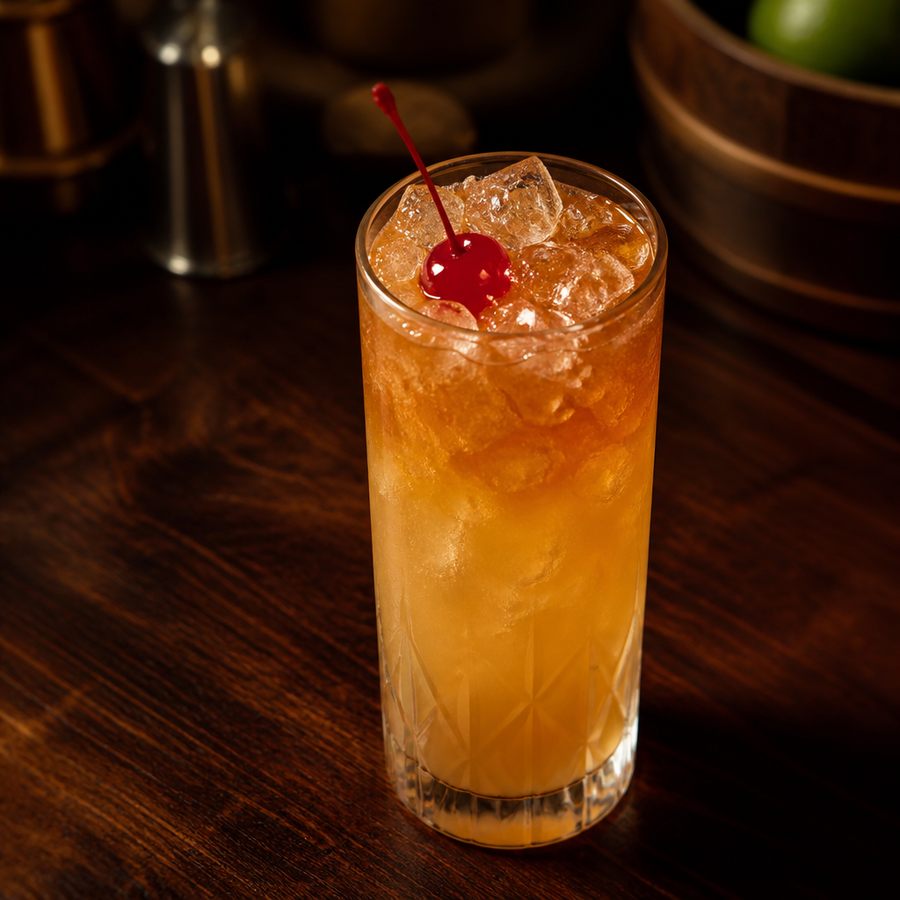
Trader Vic, 1944. According to his story, he poured the new cocktail for friends from Tahiti, and they said 'maita'i roa ae' — 'very good'. The original was extremely strict: aged Jamaican rum, orgeat, curaçao, lime — and nothing more. What’s served under this name today often doesn’t trace back to it, but rather to hotel versions from the sixties with pre-made mixes and juices; the catalog records just such a bar version. It’s good to know the difference: if your Mai Tai has pineapple juice, it’s not a Mai Tai, but a tropical cocktail with a nice name.
Ingredients
- White rum — 30 ml
- Orgeat syrup — 15 ml
- Triple sec — 15 ml
- Sweet and sour mix — 45 ml
- Cherry — 1 pc.
How to prepare
- Fill a shaker with ice.
- Add rum, orgeat, triple sec, and sweet and sour mix.
- Shake.
- Strain into a Collins glass.
- Garnish with a cherry and serve with a straw.
Tip: Orgeat is an almond syrup with orange flower water, and you can't just replace it with 'plain almond': you'll lose the floral note that this whole thing is about. You can easily make sweet and sour mix yourself: half lemon and lime juice with simple syrup.
The Fourth Era. 1970–1995: dark times
This period of bar culture is remembered with the same tone as a family reminiscing about awkward teenage photos. Fresh juice gave way to concentrates, ice became a generator in the back room, and bartenders turned into DJs. Cocktails became bright, sweet, and very strong: the main criterion became 'it should hit hard and look good.'
It's easy to criticize this era, but to be fair: it brought millions of people to the bar who would never have come for a Manhattan. And its excesses sparked a reaction that led to a renaissance.
7. Long Island Iced Tea
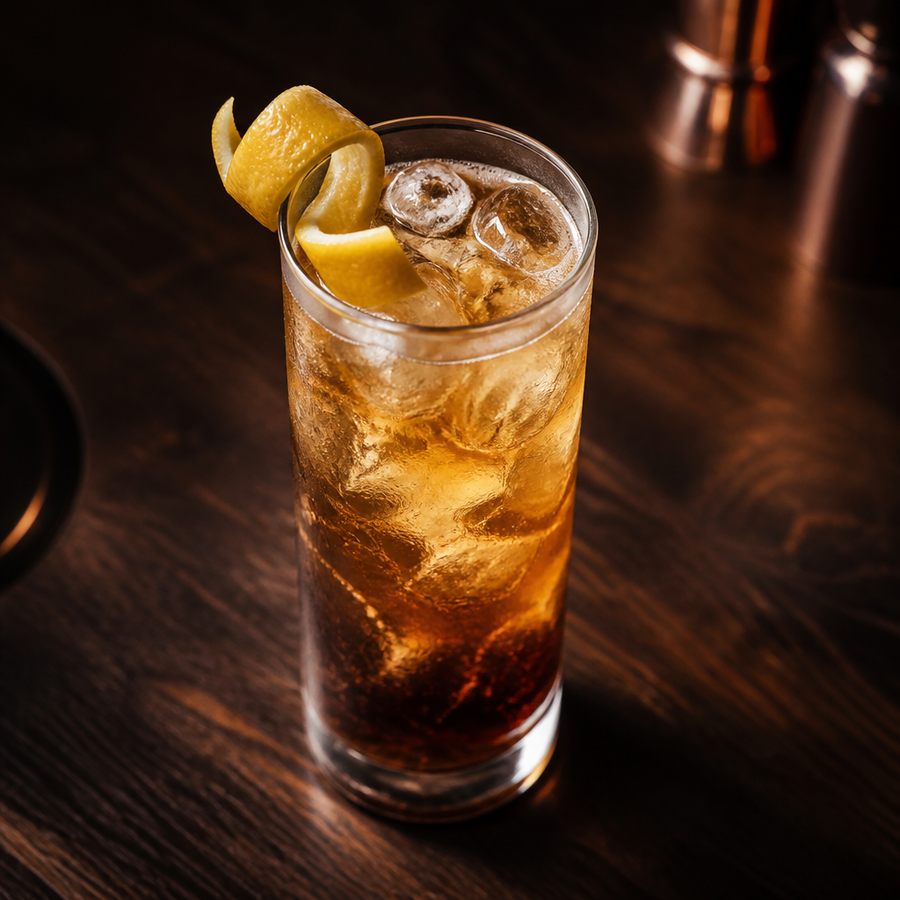
Four different spirits in one glass, cola for color, and 27% ABV — a cocktail that can't be defended in terms of taste and can't be erased from history. It's attributed to Robert Butt, a bartender at Oak Beach Inn on Long Island, in the early seventies; the versions are disputed, but he describes the era more accurately than any other drink. There's no tea in it, of course — just the color.
Ingredients
- Vodka — 15 ml
- Tequila — 15 ml
- White rum — 15 ml
- Gin — 15 ml
- Triple sec — 15 ml
- Cola — top up
- Lemon peel — twist
How to make it
- Fill a highball glass with ice.
- Pour in vodka, tequila, rum, and gin.
- Gently stir.
- Add cola for color.
- Garnish with lemon or lime peel.
Tip: the only way to make it decent is to add 20 ml of fresh lemon juice before the cola. The acidity pulls the drink from the 'strong and sweet' category into the 'strong and clear' category.
8. Cosmopolitan
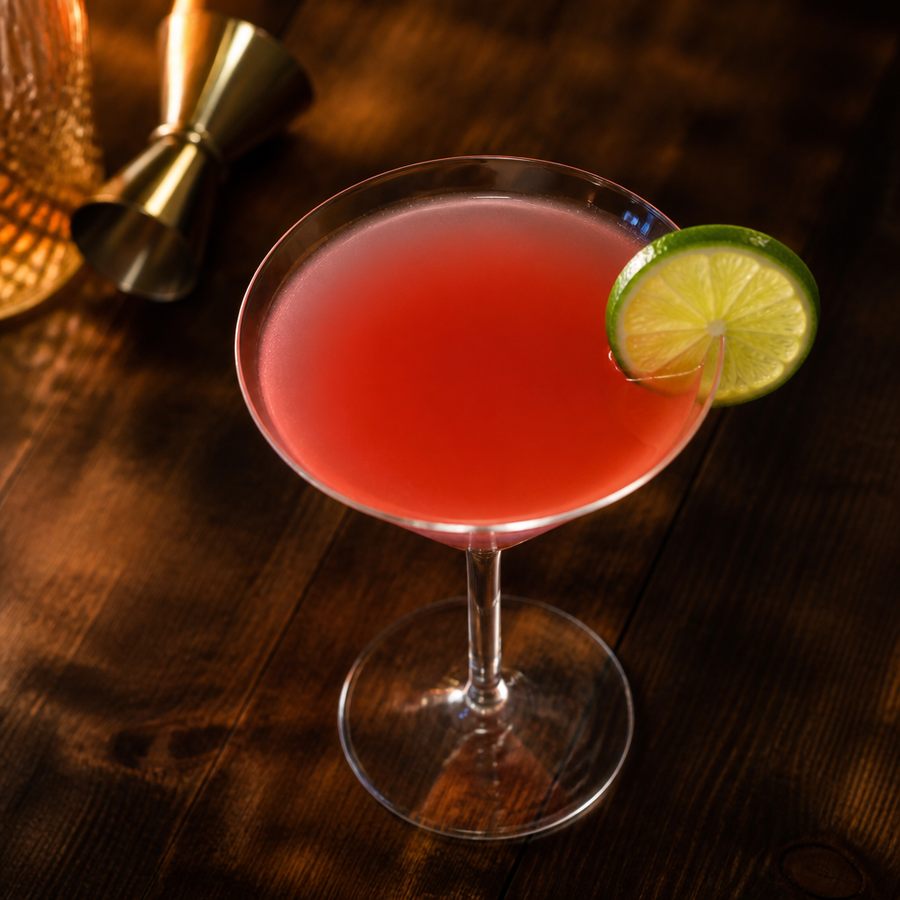
Toby Chekini, New York, 1988: he took a pink vodka mix that was making the rounds in bars and revamped it with fresh lime and decent triple sec. Ten years later, 'Sex and the City' made the Cosmo the most recognizable cocktail on the planet, and another ten years after that — the most ridiculed. Unfair: it's a neat, balanced sour that only loses to its own reputation.
Ingredients
- Vodka — 40 ml
- Triple sec — 20 ml
- Cranberry juice — 30 ml
- Lime juice — 15 ml
How to make
- In a shaker with ice, add all the ingredients.
- Shake vigorously for 10–15 seconds.
- Strain into a chilled martini glass.
- Garnish with a lime wedge.
Tip: use unsweetened cranberry juice, not 'nectar'. The pink color should come from the cranberry and lime, not from syrup — otherwise, you'll end up with that overly sweet Cosmo that got the drink blacklisted.
Era five. 1995 — present day: renaissance and new classics
First, we brought back the technique: fresh juice, proper ice, scales, and a jigger instead of 'eyeballing it'. Then we brought back the books — we reread and reissued old recipe books. And then something happened that hadn’t occurred in half a century: bartenders started inventing cocktails again that would enter the global canon while their creators were still alive.
The two drinks below are from the mid-2000s, and both are already listed on bar menus alongside the Manhattan as equals.
9. Penicillin
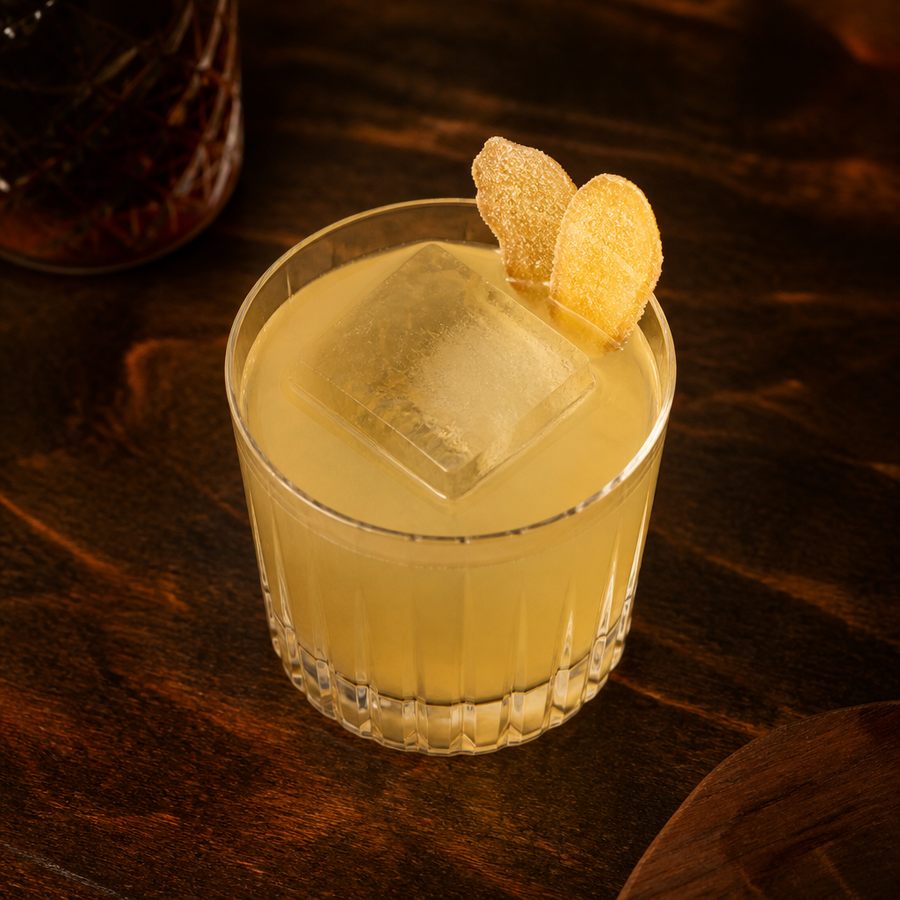
Sam Ross, New York bar Milk & Honey, 2005. The idea is simple to the point of audacity: to create a whiskey sour with honey and ginger, then top it with a smoky island Scotch that doesn’t mix but greets you with the first sip. It turned out to be a cocktail that feels like both a medicine and an absolutely modern creation. Twenty years on — and it’s on the menu on every continent.
Ingredients
- Blended Scotch — 60 ml
- Lemon juice — 22.5 ml
- Honey syrup — 10 ml
- Ginger syrup — 10 ml
- Island single malt Scotch — 7.5 ml (on top)
How to make it
- In a shaker, mix blended Scotch, lemon juice, honey syrup, and ginger syrup with ice.
- Shake well.
- Strain into a chilled old-fashioned glass with large ice cubes.
- Carefully pour the smoky Scotch on top.
- Garnish with candied ginger.
Tip: do not stir the smoky layer — that's the whole trick. Pour it over a turned-over bar spoon so it lays as a film, and don't give the guest a straw.
10. Oaxaca Old-Fashioned
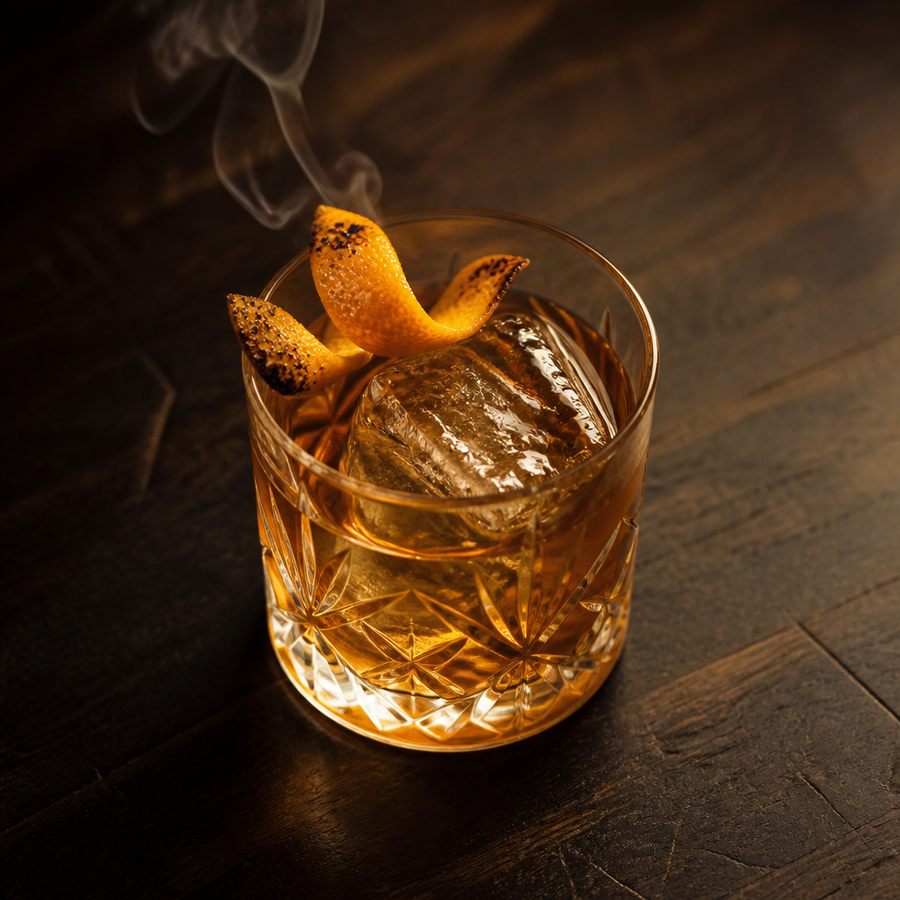
Phil Ward, New York, 2007. He took the 1806 formula and swapped whiskey for agave: reposado tequila plus mezcal, agave syrup instead of sugar, and chocolate bitters instead of Angostura. The circle is complete: two hundred years later, the most talked-about new cocktail turned out to be the same old 'spirit, sugar, water, and bitters,' just with a different bottle. There couldn't be a better ending to this story.
Ingredients
- Reposado tequila — 45 ml
- Mezcal — 15 ml
- Agave syrup — 7.5 ml
- Chocolate bitters — 4 dashes
How to make
- Combine all ingredients in a glass with ice.
- Stir with a bar spoon until chilled, adding ice as it melts.
- Garnish with a burnt twist of orange peel.
Tip: The peel is set on fire not for show: the flame caramelizes the essential oils, and a scent of burnt orange wafts over the glass, pulling the smoke of the mezcal forward. Hold the peel with the skin facing the glass and snap it over the flame of a match.
Two hundred years, five eras, one principle: a cocktail has always reflected what was available. There was ice and no citrus — we got an Old Fashioned. There was bad spirit and there was honey — we got Bee's Knees. There was cheap rum and a dream of the tropics — we got a Zombie. There was advertising and no fresh juice — we got a Long Island. And now everything is available at once — and that's why the best cocktail of the era turned out to be an old recipe with a new bottle.
Clickable timeline of eras with photos — on the site →
All cocktails — in the catalog →
Mark the bottles on your shelf — the site will show what you can mix right now →